
Trivia host guide
Trivia Nights: How to Plan Better Games
Trivia nights are not just question lists. They are live group experiences where pacing, trust, teams, and answer handling matter as much as the quiz itself.
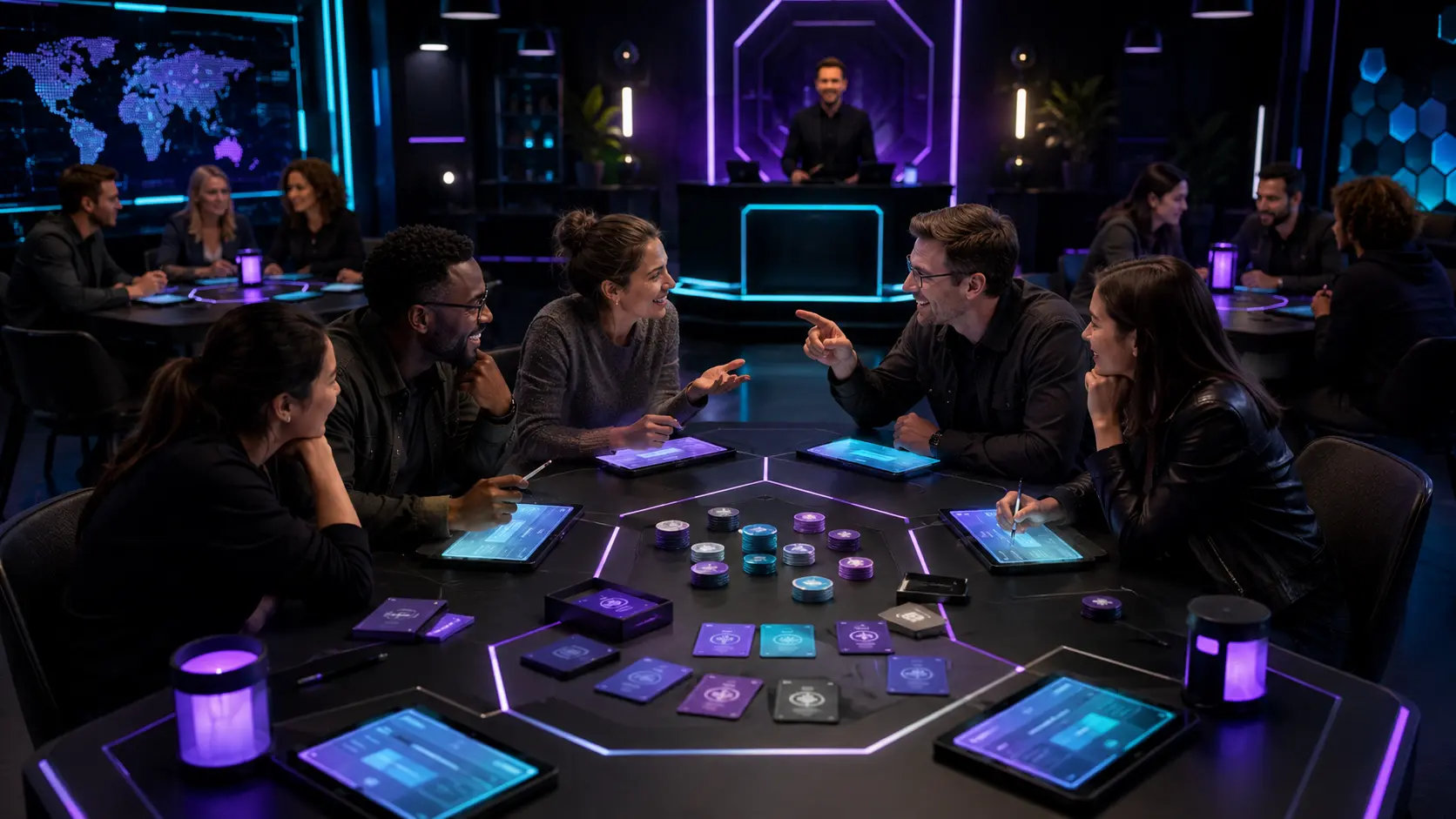
Planning a workplace event? Explore these online team building games for work, including a room-code trivia format for coworkers.
What makes trivia nights work?
Trivia nights work when players understand the rules, trust the answers, and feel the game moving. A strong format uses clear rounds, small teams, fair scoring, and a host who can resolve disputes without slowing the room.
The basic pub quiz format endures because it gives groups a predictable rhythm. A host asks, teams confer, answers lock, scores update, and the next round starts. That rhythm is familiar in bars, classrooms, clubs, offices, and family game nights.
The Wikipedia overview of a pub quiz describes the social structure behind many trivia nights. The important lesson is simple: people need enough structure to compete, but enough room to talk, laugh, and recover from wrong answers.
How many rounds should trivia nights have?
Most trivia nights should use four to six rounds plus a final question. That gives enough variety for different players to shine without making the event feel endless.
Start with an easy warm-up round. It reduces anxiety and lets late arrivals settle. Then use two or three middle rounds built around categories such as movies, history, music, sports, science, or local culture.
Finish with a final round or single wager-style question. The final should create drama, not punish the whole room. If only one team could know the answer, it is probably too narrow.
How should teams work?
Trivia teams usually work best with three to six players. Smaller teams keep everyone involved, while larger teams can hide quiet players and slow answer decisions.
If you are hosting in person, let teams choose names before the first round. It creates identity fast. If you are hosting a classroom or office game, use Smart Lists as a team generator to split people quickly and avoid the awkwardness of manual selection.
For remote or hybrid play, share the room rules in advance. Tell players whether side chat is allowed, how answers are submitted, and how long each question stays open.
How do you choose trivia questions?
Good trivia questions are clear, answerable, and varied. Mix easy confidence questions with medium questions and a few hard ones, then verify each answer before the event.
A quiz is a question-and-answer activity used for learning, competition, or entertainment. The broader reference on quizzes is useful because it shows trivia sits between assessment and play.
For casual trivia nights, avoid overly technical wording. Ask one thing at a time. If a question depends on a date, title, or exact name, make sure the answer source is stable.
How can AI help trivia nights?
AI can help trivia nights by generating niche questions quickly, but it should not be the final authority. Use AI with source grounding, host review, and a challenge path for disputed answers.
This is where Infinite fits. It gives hosts local play and live rooms, with grounded question behavior, powerups, reveal controls, and Challenge AI when players dispute an answer.
AI is most useful when the host wants a specific lane, such as "beginner astronomy for middle school" or "Pixar plot trivia with no production questions." The narrower the topic, the better the game usually feels.
How do you avoid answer disputes?
Avoid disputes by stating answer rules before play starts, using verified questions, and giving the host a review path. Players accept correction more easily when the process is clear.
Disputes usually happen for three reasons: vague wording, alternate correct answers, or outdated facts. Each one is preventable. Write questions with one expected answer, check that answer, and decide how close spelling must be.
If a player challenge is valid, award the point and move on. A trusted host protects the night better than a host who tries to win every argument.
What should you do after the event?
After trivia nights, save the format, note which rounds landed well, and reuse the best structure. The fastest improvement comes from keeping what worked and replacing weak categories.
Hosts often rebuild from scratch because they do not keep a system. Instead, save your categories, team rules, scoring format, and favorite topics. The next event should start from a template.
If you want printable or manually edited questions, use Mind Prints as a custom quiz maker. If you want fast AI drafting from sources, use NeuralRun Quizzes.
Trivia nights FAQ
What is the best trivia night length?
Most groups do best with 75 to 120 minutes, including breaks and scoring.
Should trivia nights have prizes?
Small prizes help, but they do not need to be expensive. Bragging rights can work for casual groups.
Can trivia nights be educational?
Yes. Classroom trivia can reinforce recall, discussion, and confidence when questions match the lesson.